
Behind the Scenes at NASA’s Kennedy Space Center
NASA’s Mission Statement: “To pioneer the future in space exploration, scientific discovery and aeronautics research.”

Hello fellow travelers,
I wanted to share with you one of the most incredible experiences that I have been able to witness. Ever since I was a little girl, the idea of space travel has always fascinated me, since I am a bit of a science nerd myself. So, for this travel blogging entry, I wanted to share my experiences with you all as part of the NASA Social experience.


First, a bit of history on Space Travel:
The Space Age began when the Soviet Union launched the “Sputnik” on October 4th, 1957. History has recorded this event as the world’s first artificial satellite. An artificial satellite is basically an object that humans have made and launched into orbit. On July 29, 1958, the National Aeronautics and Space Administration (NASA) was formed to not only meet but exceed the efforts of the Soviet Union. Thus, the Space Race began, fueled by not just the fear that “the others” might get there first but a desire to innovate and accelerate our technological advancement.
Here is a great little video showcasing how NASA came to be:
NASA on the daily
What a lot of people may not know is that NASA’s scientific innovations impact our daily lives on the regular. According to the JPL Infographics, NASA has provided us with things ranging from camera phones and scratch proof lenses to CAT scans, water purification systems, and even baby formula! For a full list, check out the link above. Simply put, without NASA’s innovations, we would not have the technological advances that we have today and will continue to need going into our future.
Now, that you know a little bit about NASA and how its discoveries benefit us , lets get back to our behind the scenes tour.

To start, I want to give a BIG thank you to the staff at NASA Social and NASA for giving me the opportunity to check out the behind the scenes work at this facility. The work you do changes lives daily and it is a true example of American innovation at its finest.
What’s on Board Briefing
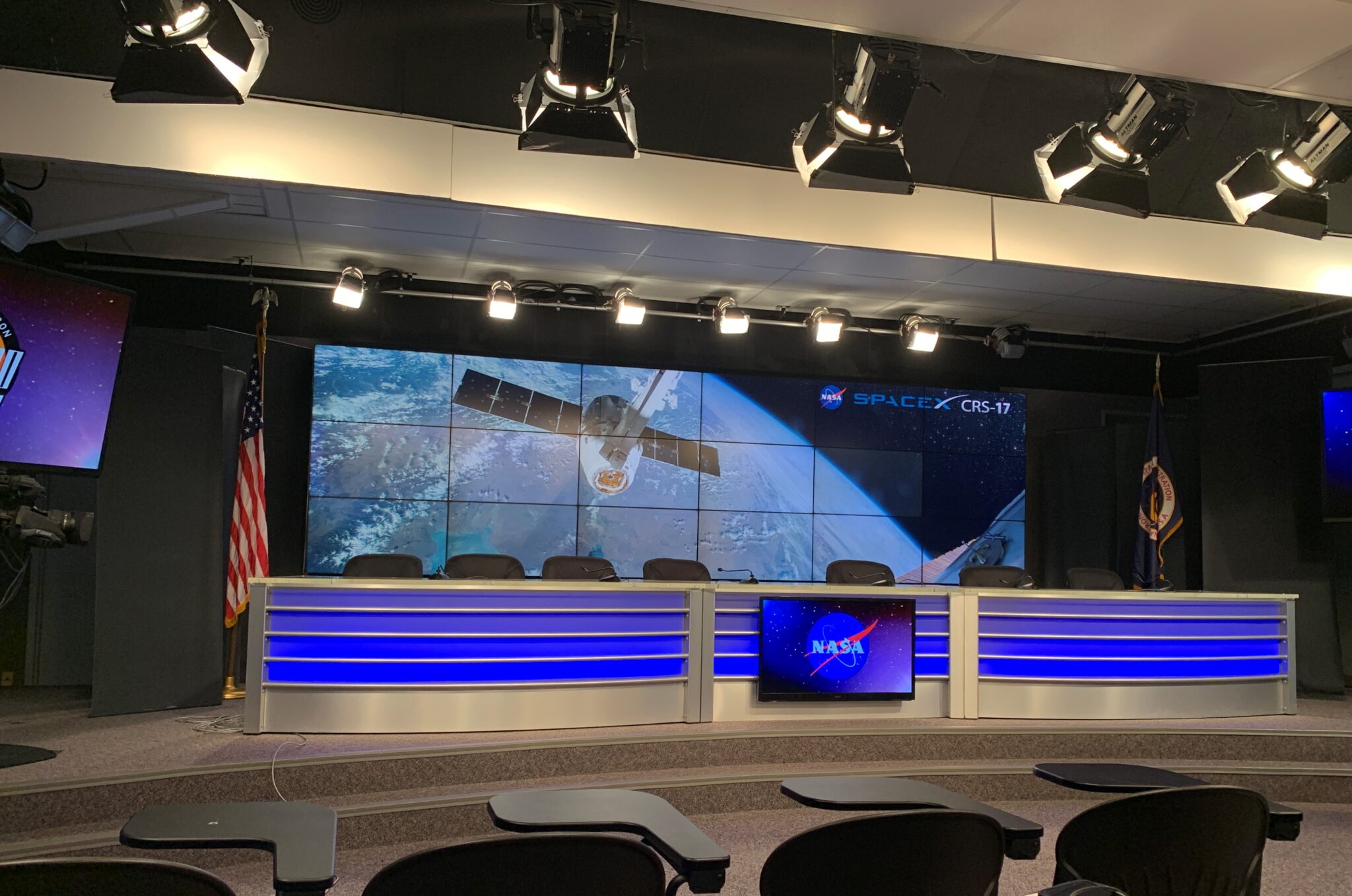
Our first stop was the NASA Briefing room. Here, we received a presentation showcasing some of the supplies, technologies and research that were going inside the Dragon CRS-17 re-supply mission to the International Space Center. Here are some of the highlights that were featured during the briefing:
Orbiting Carbon Observatory-3. The object of this experiment is to read Carbon Dioxide levels here on Earth, which fluctuate through the different seasons. This hardware includes a carbon sensing array that is placed on the exterior of one of the ISS modules and aimed down at the Earth. For more information, please check out Nasa’s Carbon Study clicking the link.
-

- Dr. Annmarie Eldering with the OCO-3 Prototype
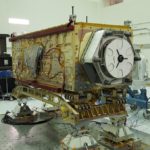
Hermes. The Hermes experiment’s sole mission is to help study the surface of asteroids as if the researches were on the asteroid themselves. This device will help study samples of simulated asteroid particles and see how they behave in microgravity and the vacuum of space. Microgravity is the more precise scientific term for what we mere Earthlings colloquially call weightlessness. For more information on the Hermes please click the link.
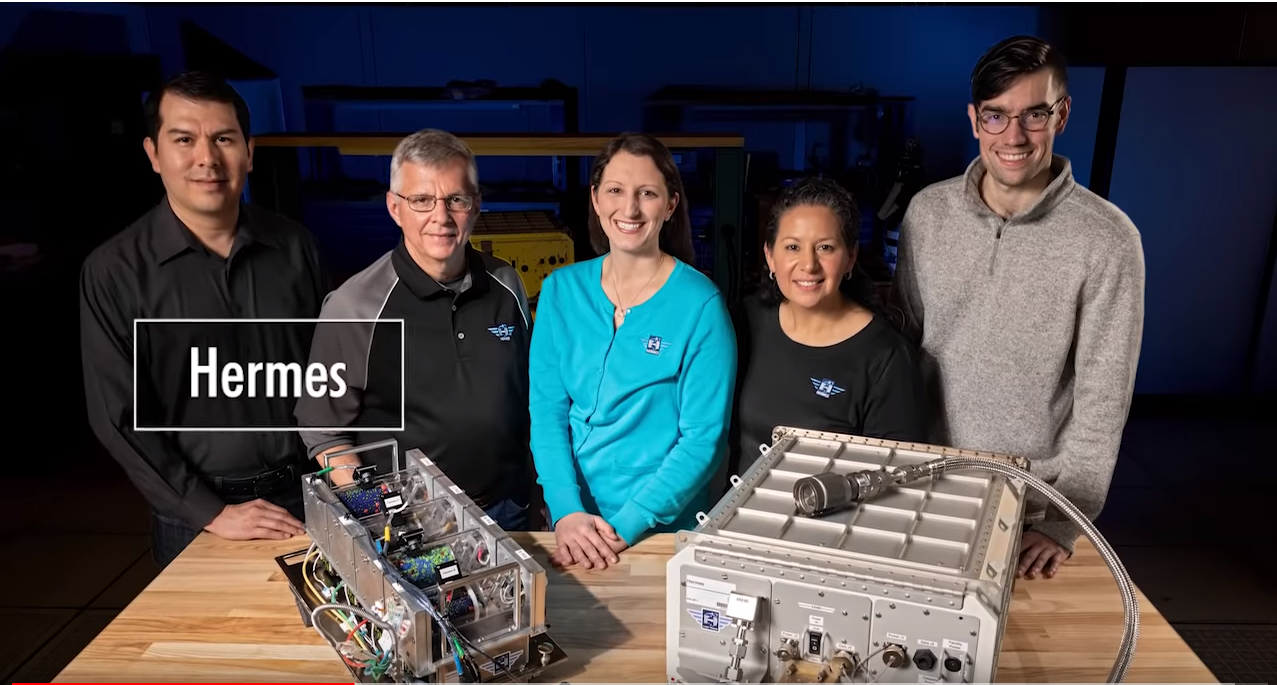
Dr. Kristen John and her team
Chips in Space – The third presentation, a personal favorite of mine, was named, “Chips in Space”. The National Center for Advancement in Translational Sciences (NCATS) was designed to create artificial human tissue to help study diseases and speed up the process of drug discovery using microgravity. On this mission, they sent up the following: lung, bone marrow, kidney, chips modeling the blood/brain barriers, bone, and cartilage chips. For more information on the Chips in Space initiative, click on the link.

Dr. Lucie Low with a Tissue Chip
-
- Close up view of the chip
-
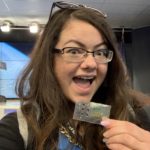
- Selfie with the Tissue Chip
Finally, the presenters introduced us to the winners of the Genes in Space-6 competition. These high school students had to design an experiment to take to the International Space Station. Their experiment was designed to examine how to repair pathway frequencies as well as DNA helix breaks in microgravity.

Left to Right: Aarthi Vijayakumar, David Li, Michelle Sung and Rebecca Li
The briefing was great validation to the notion that NASA’s contribution to innovations and technology extends far beyond the walls of the space station.
Kennedy Space Center Launch Complex
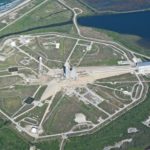
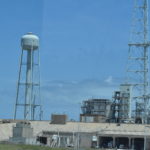
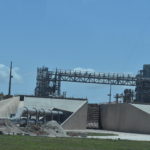
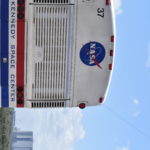
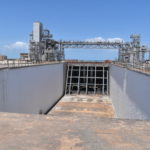
The next stop on our journey was Kennedy Space Center’s Launch Complex 39 B. This launch pad showcases some of the most significant space flights in our history including the Apollo missions, Skylab, and the Space shuttle programs. Recent updates to this launch pad include a flame deflector that will safely deflect the plume exhausts from the Space Launch System rocket during launch. They hope to support the launch of the SLS rocket and Orion on Exploration-1.
-
- Aerial view of launch pad 39B
-
- From the ground up
-
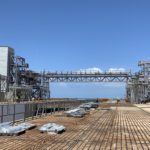
- Our Bus on the Launch Pad
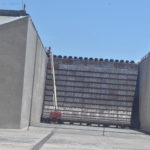
Exploration-1 Mission
The Exploration-1 mission will be the first integrated flight test of NASA’s deep space exploration system: The Orion Spacecraft, Space Launch System (SLS) rocket and ground systems.

Source: NASA.gov
Vehicle Assembly Building (VAB)
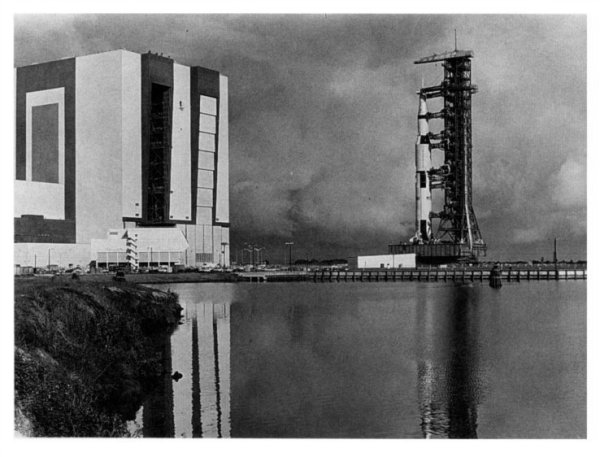
Our next stop was the Vehicle Assembly Building, one of the largest buildings in the world. It is 525 feet tall and 518 feet wide, covering over eight acres. This is the only facility in the world that has been able to facilitate human travel beyond low-Earth orbit and on to the moon. For 30 years, it also served as the final assembly point for space shuttles, external fuel tanks, and solid rocket boosters. We were fortunate to be able to take pictures of not only the assembly building itself but a rocket inside the facility being assembled as well.

Our guide told us that the bay doors are the largest in the world, measuring 456 feet high and taking upwards of 45 minutes to completely open or close.

Rocket Transportation
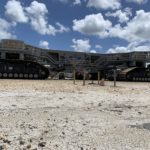
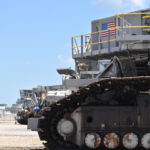
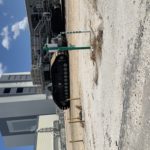
Our next stop was the NASA crawler-transporters. These impressive vehicles, originally designed in the 1960s, help transport the mobile launcher, space launch system rocket and the space crafts themselves. Weighing in at 6.6-million-pound, this behemoth is the largest land vehicle on earth and can transport up to 18 million pounds of cargo. However, manning this giant metal monster is no easy feat. It takes a team of over 30 engineers to operate this vehicle.
-
- Trying to get a full picture, but it is very hard to capture this giant
-
- Look at those exhaust pipes
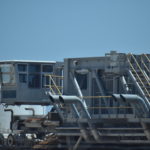
-
- One of the operation centers for the Crawler
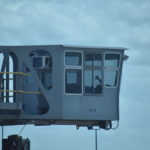
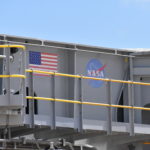
It uses the “Crawlerway” to get from the VAB to the launch pads at a whopping 1 mph (loaded) or 2 mph(unloaded). They use special Tennessee river gravel due to its anti-spark properties to help the crawler get to its destination without incident. It can take up to 7 hours for this massive vehicle to get to point A to point B.

Yes, the Crawlerway uses BOTH of those gavel roads at the same time

Crawler transporting the Discovery to platform 39 B
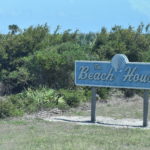
We then departed to the highly anticipated SpaceX Launch Complex 40, where the rocket launch as designated to occur. On the way however, we saw the Beach House. This historic building has held generations of astronauts and their families for a quiet retreat to say their last goodbyes before jetting off into space. To see this piece of history was so peaceful and served as a great reminder that our astronauts put everything they love on hold to work for the betterment of society as a whole.
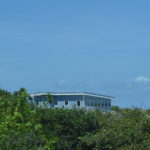
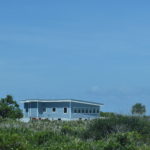
SpaceX
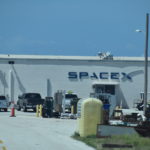
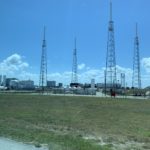
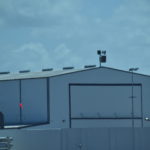
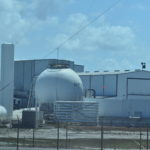
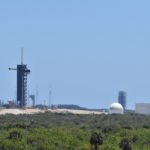
Our guides then took us to the SpaceX Falcon 9 LaunchPad 40 where the launch was to take place. Interestingly, SpaceX assembles its rockets horizontally, a practice mirrored only by the Russian Space Program. I was, however, not surprised at the myriad Tesla’s dotting the complex.
-
- On Location
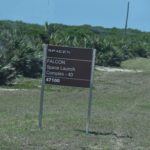
-
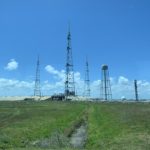
- The four towers
-
- SpaceX’s horizontal integration hangar
-
- A quick view of SpaceX Launch Pad 39
The Space Station Processing Facility
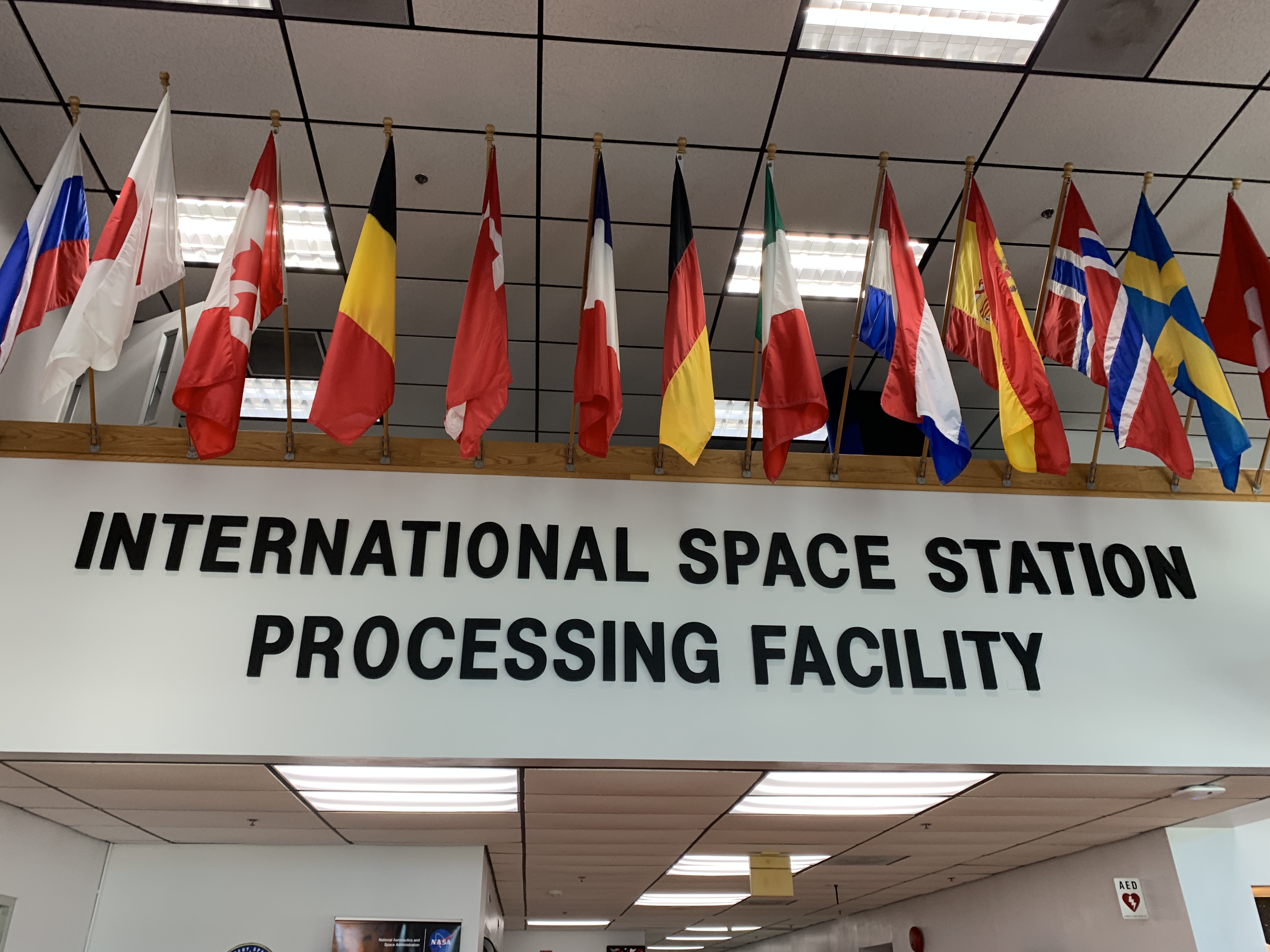
After this photo op, we headed out to the Space Station Processing Facility. Here we observed some of the research currently being done in the NASA laboratories. The SSPF is typically the last stop on Earth for cargo going up to the International Space Station.
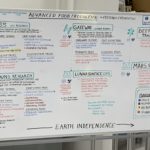
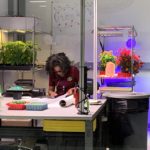
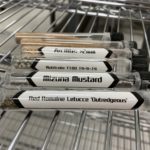
One of the highlighted lines of research was “Plants in Space”. The sole purpose of these studies is to support the practice of growing crops in space to help support space travelers in future missions. Growing crops in space would allow the astronauts to be more self-reliant and require fewer re-supply missions. It would also open the door to longer missions at farther distances from home.
-
- Different Seeds they are growing
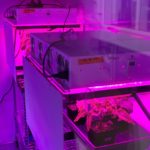
Here is a quick video from one of their team members explaining the science behind, the Plants in Space program:
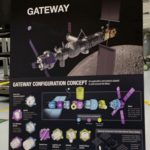
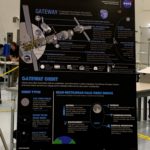
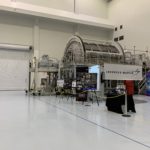
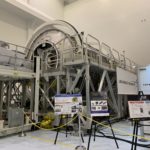
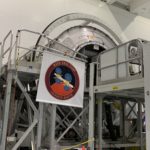
On the topic of being further from home, we were next able to see Lockheed Martin’s Lunar Gateway. Less a final destination than a waypoint, this station would perform a function in a lunar orbit similar to that of the ISS in Earth orbit. It would act as a home base for lunar experimentation and a potential jumping-off point for Martian travel.
-
- Gateway Mission
-
- Some stats
-
- Lunar Gateway!
-
- Mission to Mars
Hanger AE
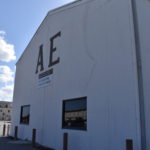
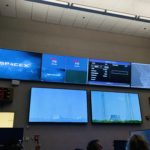
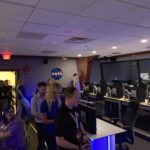
Our last stop was at Hangar AE Control Center, which is used by the NASA Launch Services Program as a communication center, receiving and monitoring telemetry data from launch vehicles and spacecraft on the ground and during flight. It is here that I learned that space travel is not just about astronauts. It takes a team of experts such as physicists, biologists, engineers, media, lawyers and other important titles to make a launch possible. It is truly a team effort that leads to successfully completing these missions.
-
- Hanger AE
-
- Controlling the launch pads
-
- Geeking out at the control center

-
- For every successful Mission, a patch is placed on the door
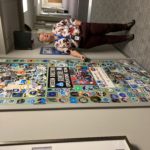
Here is a little video of the team talking about the launch patches and what they represent:
The Launch
-
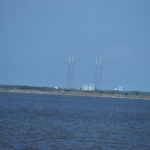
- Remember those four towers from before? This is where NASASocial brought us to see the Rocket Lauch
-
- 2.9 miles away
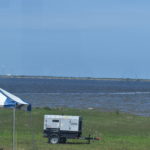
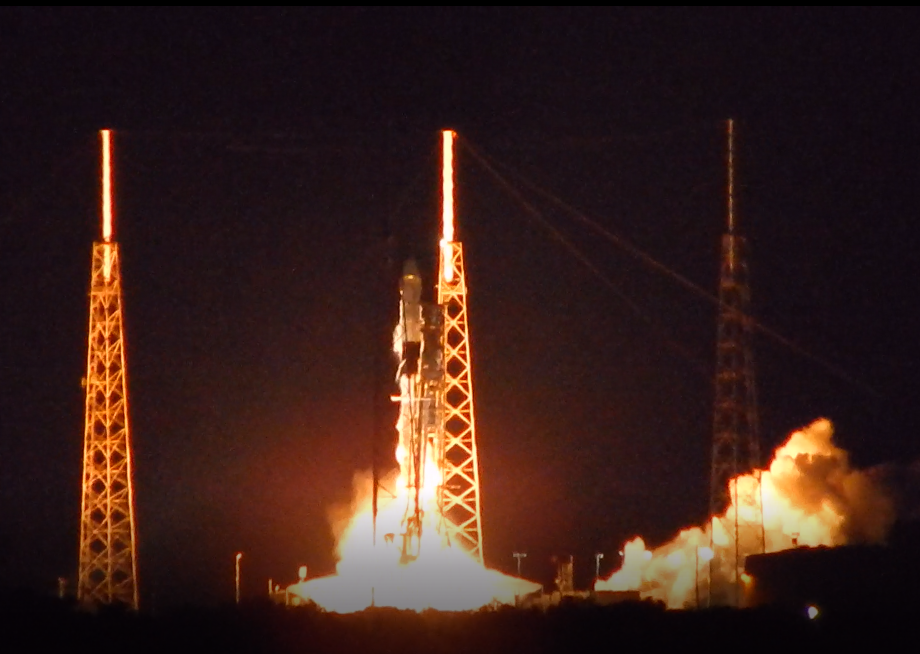
After being rescheduled three times and scrubbed once more five minutes before launch on the first night, the anticipation for a successful launch was palpable. We were told that only one more attempt could be made with our social media group present. This was our last shot and I was going to be there regardless of the hour. When we arrived at the NASA causeway, we eager and a little sleep deprived. The rocket was gleaming with all the lights shining on it. The night was clear and with a beautiful hemisphere full of shimmering stars above our heads.

Although I was expecting to see a launch, I was not expecting to see dolphins jump out of the water 10 minutes before launch. This surprising event made an already exciting evening even more unique.

When I first heard the countdown, my heart started to race. The sound and the rumble that came from that machine was indescribable and more impacting than I imagined. It brought tears to my eyes to witness such a beautiful collage of science, technology, sweat, and tears culminate at this moment.
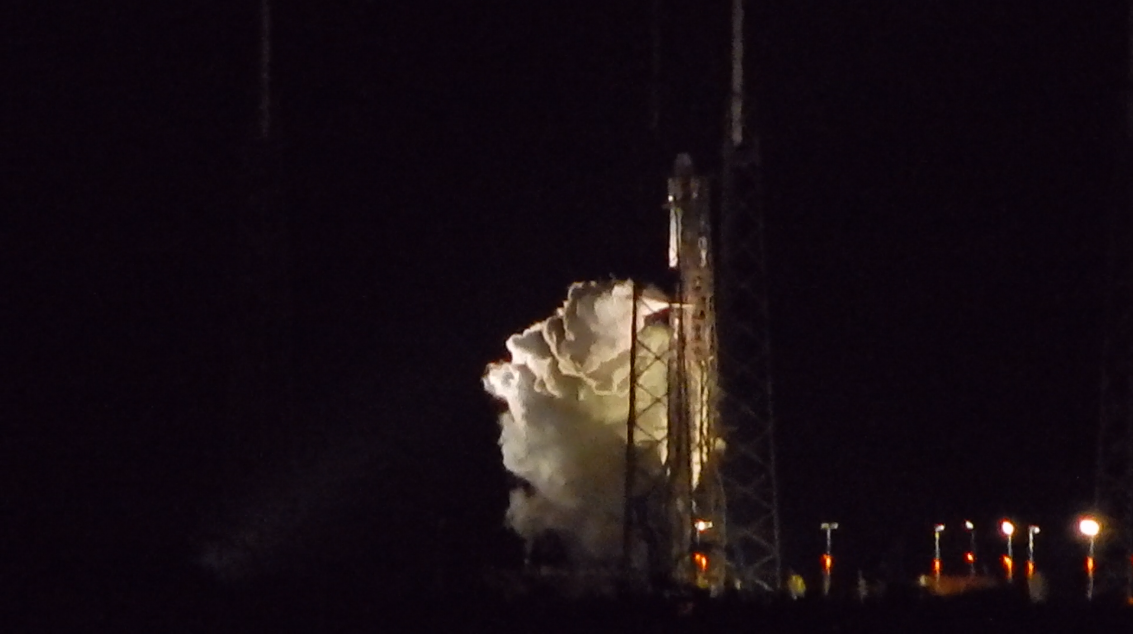
And then, it happened. It was incredible to watch a vehicle weighting 600 tons hurled into space on the backs of 50 years of science and research and even more impressive to watch as Stage 1 descended in successfully landed on the drone ship 12 miles out to sea.


I would urge anyone with an interest in space, science, or being awake at 2 AM, to attend a rocket launch at least once in your life. The experience is monumental and ignites a realization of how incredibly fortunate we are to have space programs that are always pushing the boundaries of our knowledge and technology. While space may be the final frontier, it presents us with infinite opportunities to learn, explore, and pass a better future onto our children.

After this experience, I have a new appreciation for what it truly means to earn this patch.
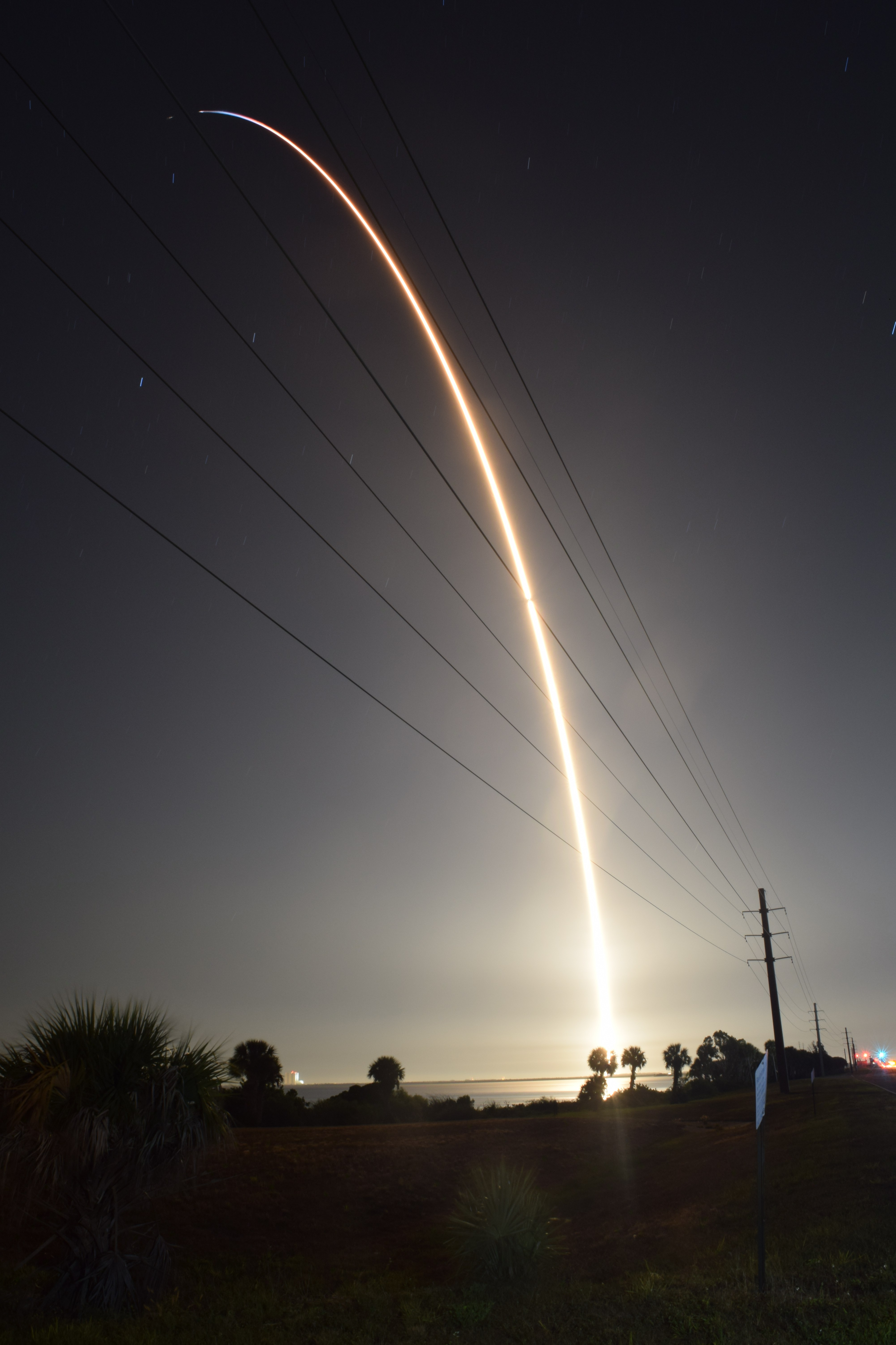
My husband took this photo from just outside of KSC
Thank you for joining me on this adventure and remember, even if your vehicle is less impressive than a rocket ship, your travel opportunity is waiting for you. Don’t forget to seize it!
Brizzy


2 Comments
Leave your reply.